When students compose their own yoga sequence
A university teaching study records students’ accounts of greater authorship, while finding no reliable survey advantage over conventional instruction.
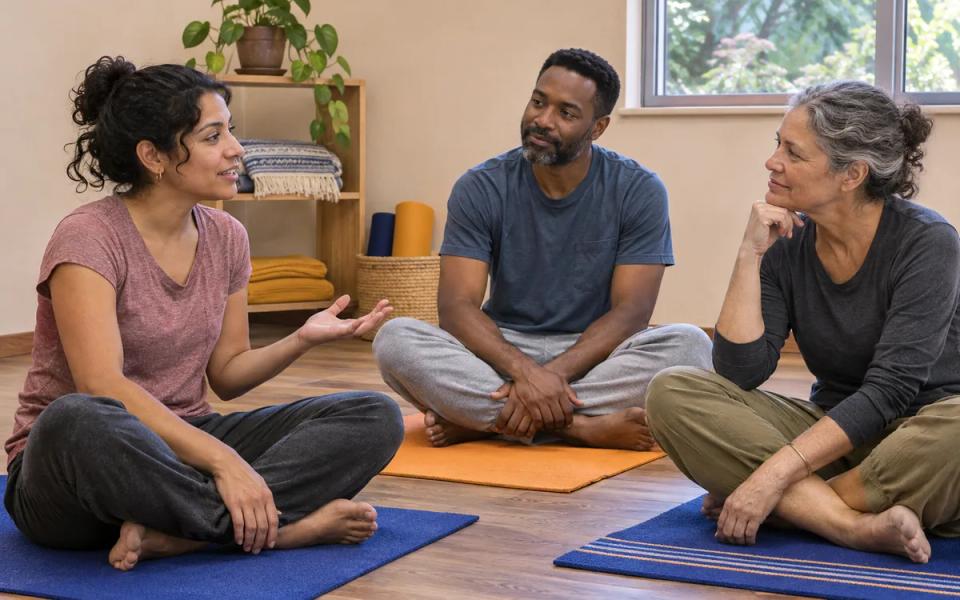
A Frontiers in Psychology study published November 3 examines two parallel university yoga classes in China over an 18-week semester. Both had the same teacher. One followed conventional demonstration and correction; the other included students arranging and presenting their own sequences.
Student accounts beside the numbers
The choreography task asked groups to connect ideas about practice with a sequence they could explain and demonstrate. Reflective accounts from that class describe paying closer attention to bodily sensations, discussing adjustments with peers and beginning to see themselves as people who could shape a practice.
Those accounts do not establish that the approach outperformed conventional teaching. The post-course comparison found no statistically discernible advantage in internalization. No motivation dimension remained significant after correction for multiple comparisons. An initial difference on one dimension favored the conventional class.
The classes were not a randomized experiment, and motivation was not measured at baseline. Qualitative material came mainly from the choreography group, so it cannot provide an equivalent comparison of both experiences. The study offers a teaching question about student authorship, with exploratory evidence rather than a proven better method.
Sources
YOGA+